Dujon AM, Jeanjean J, Vincze O, Giraudeau M, Lemaître J-F, Pujol P, Újvári B, Thomas F 2023. Cancer hygiene hypothesis: A test from wild captive mammals. Ecology and Evolution, 13, e10547. link
Abstract
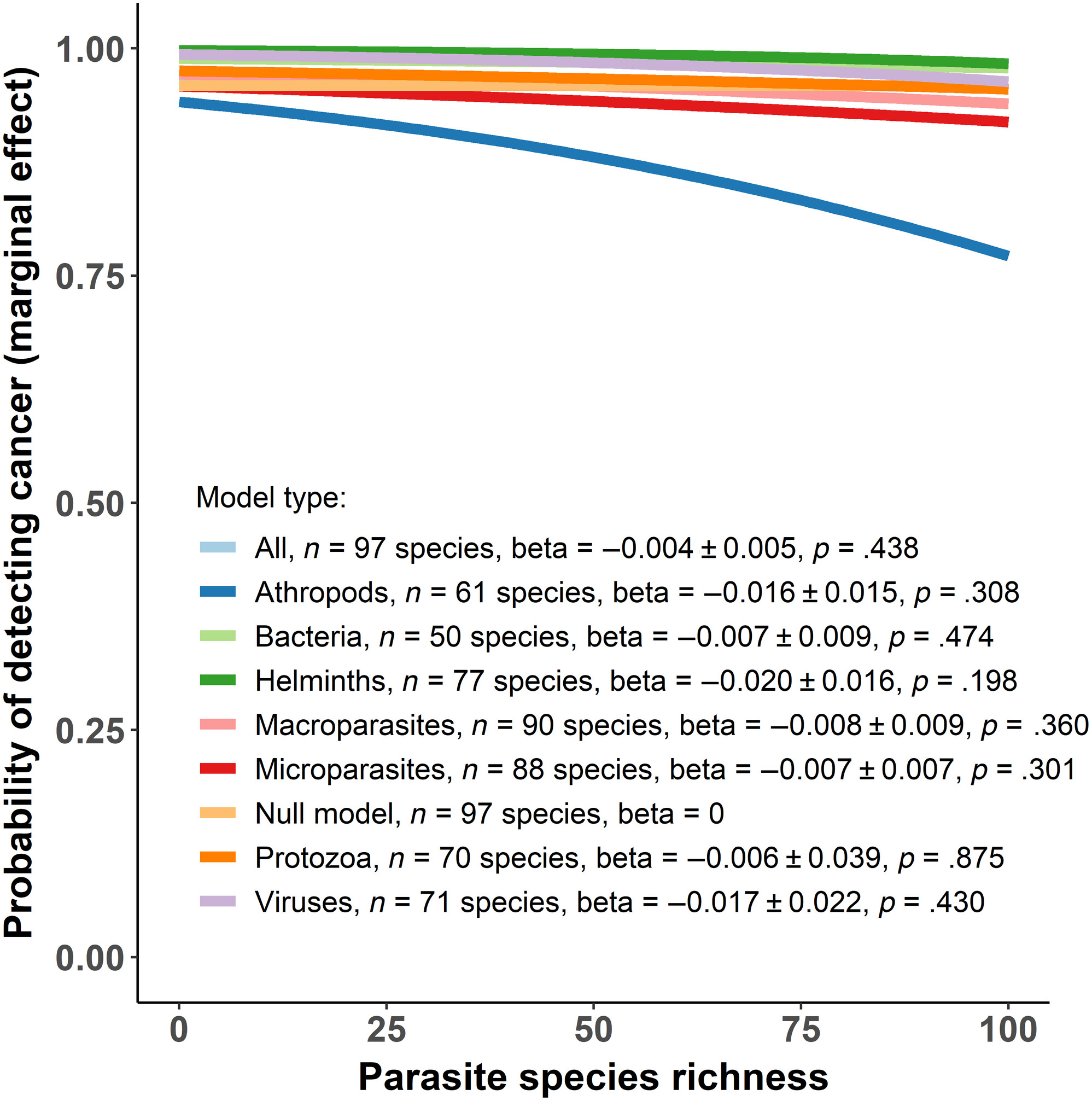
The hygiene hypothesis, according to which the recent reduction of exposure to infectious agents in the human species would be the origin of various diseases, including autoimmune diseases and cancer, has often been proposed but not properly tested on animals. Here, we evaluated the relevance of this hypothesis to cancer risk in mammals in an original way, namely by using information on zoo mammals. We predicted that a higher richness of parasitic cohorts in the species’ natural habitat would result in a greater occurrence of evolutionary mismatch due to the reduction of parasites in captive conditions. This, in turn, could contribute to an increased risk of developing lethal cancers. Using a comparative analysis of 112 mammalian species, we explored the potential relationship between cancer risk and parasite species richness using generalized phylogenetic least squares regressions to relate parasite species richness to cancer risk data. We found no strong evidence that parasite species richness increased cancer risk in zoo mammals for any of the parasite groups we tested. Without constituting definitive proof of the irrelevance of the hygienic hypothesis, our comparative study using zoo mammals does not support it, at least with respect to cancer risks.