Merondun J, … [13 co-authors] …, Fülöp A, … [6 co-authors] …, Marton A, … [11 co-authors] …, Wolf JBW 2024. Evolution and genetic architecture of sex-limited polymorphism in cuckoos. Science Advances 10; eadl5255. link
Abstract
Sex-limited polymorphism has evolved in many species including our own. Yet, we lack a detailed understanding of the underlying genetic variation and evolutionary processes at work. The brood parasitic common cuckoo (Cuculus canorus) is a prime example of female-limited color polymorphism, where adult males are monochromatic gray and females exhibit either gray or rufous plumage. This polymorphism has been hypothesized to be governed by negative frequency-dependent selection whereby the rarer female morph is protected against harassment by males or from mobbing by parasitized host species. Here, we show that female plumage dichromatism maps to the female-restricted genome. We further demonstrate that, consistent with balancing selection, ancestry of the rufous phenotype is shared with the likewise female dichromatic sister species, the oriental cuckoo (Cuculus optatus). This study shows that sex-specific polymorphism in trait variation can be resolved by genetic variation residing on a sex-limited chromosome and be maintained across species boundaries.
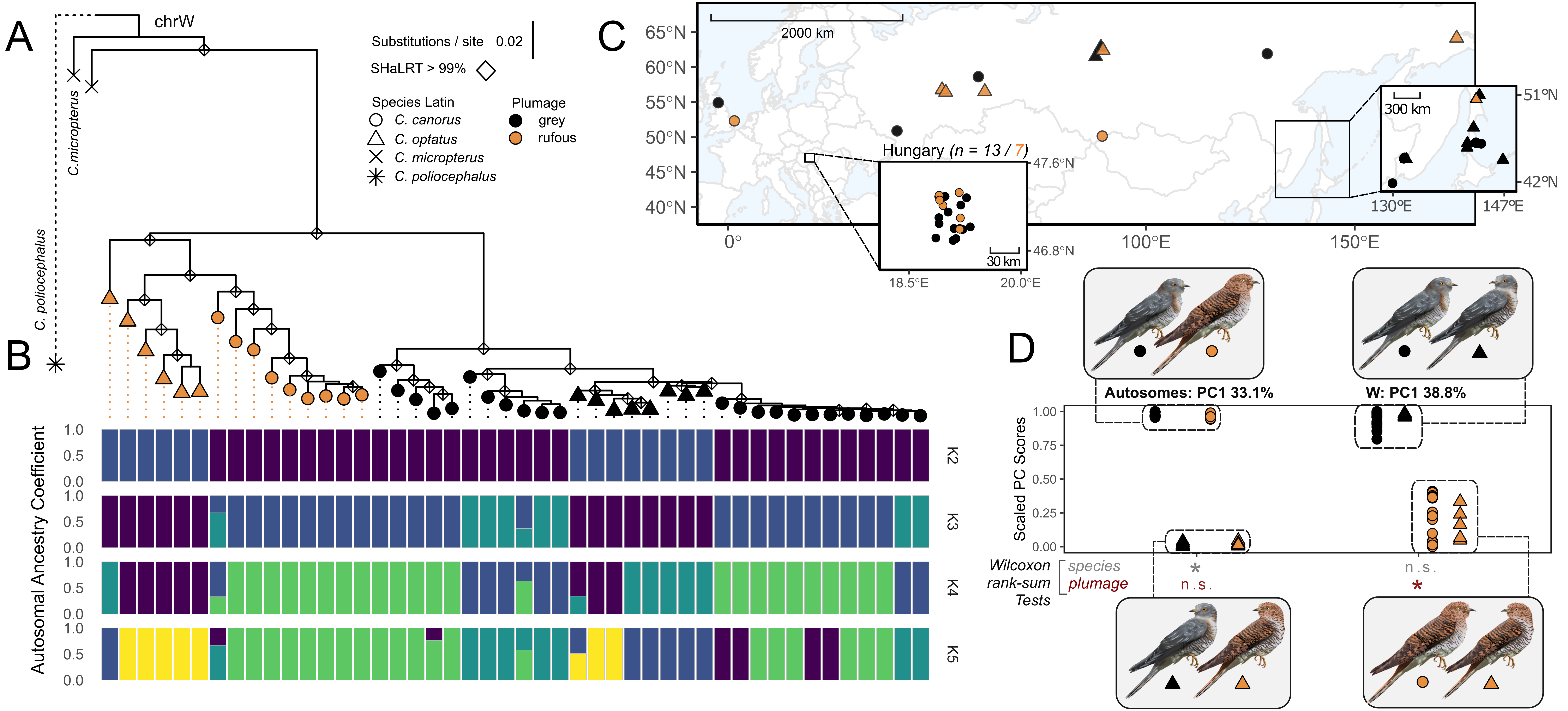
W chromosome–encoded female- limited polymorphism predates speciation of C. canorus and C. optatus. (A) Maximum- likelihood phylogeny of the W chromosome (n= 53,712 biallelic SnPs) rooted along the truncated outgroup branch of the lesser cuckoo (C. poliocephalus), further including two specimens of another outgroup species (C. micropterus). nodes with Sh- like approximate likelihood ratio test (Sh- alRt; > 99%) support are marked with a diamond. (B) Autosomal ancestry coefficients (n= 16,031,301 biallelic SnPs) with individuals (x axis) displayed in the same order as the phylogeny. (C) Jittered sampling distribution with insets for two lo-calities with higher sampling density. (D) First principal component of autosomal (left) and W chromosome (right) genetic variation, with Pc scores scaled from 0.0 to 1.0 (outgroups C. poliocephalus and C. micropterus excluded). Because of deviations from normality, two Wilcoxon rank sum tests were conducted on each axis to evaluate significant differences between species and plumage morphs, denoted below each axis after Bonferroni correction. the eigenvalue proportion of variance explained is indicated adjacent to each Pc label. *P< 0.05; ns, not significant.
Dujon AM, Jeanjean J, Vincze O, Giraudeau M, Lemaître J-F, Pujol P, Újvári B, Thomas F 2023. Cancer hygiene hypothesis: A test from wild captive mammals. Ecology and Evolution, 13, e10547. link
Abstract
The hygiene hypothesis, according to which the recent reduction of exposure to infectious agents in the human species would be the origin of various diseases, including autoimmune diseases and cancer, has often been proposed but not properly tested on animals. Here, we evaluated the relevance of this hypothesis to cancer risk in mammals in an original way, namely by using information on zoo mammals. We predicted that a higher richness of parasitic cohorts in the species’ natural habitat would result in a greater occurrence of evolutionary mismatch due to the reduction of parasites in captive conditions. This, in turn, could contribute to an increased risk of developing lethal cancers. Using a comparative analysis of 112 mammalian species, we explored the potential relationship between cancer risk and parasite species richness using generalized phylogenetic least squares regressions to relate parasite species richness to cancer risk data. We found no strong evidence that parasite species richness increased cancer risk in zoo mammals for any of the parasite groups we tested. Without constituting definitive proof of the irrelevance of the hygienic hypothesis, our comparative study using zoo mammals does not support it, at least with respect to cancer risks.
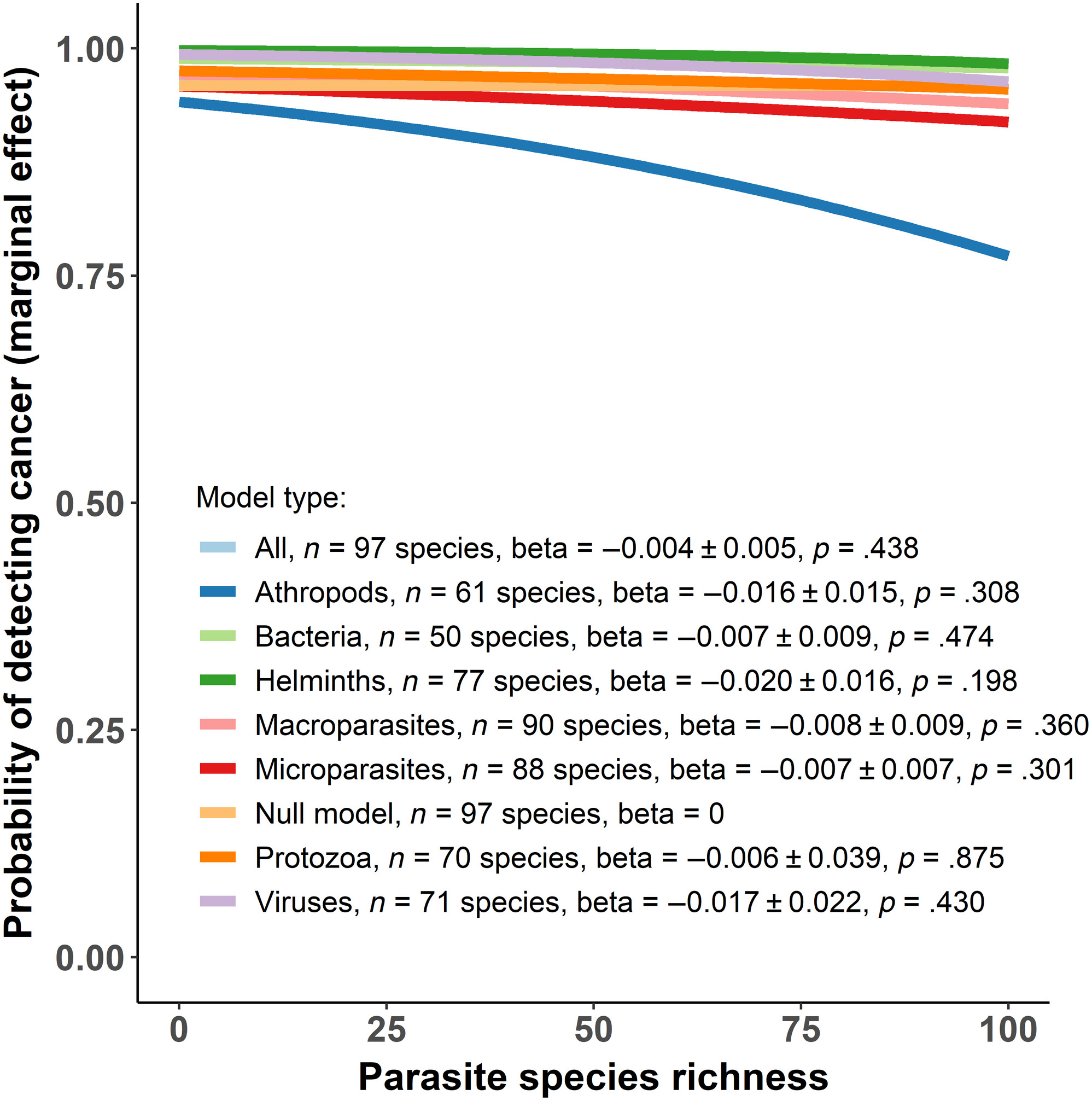
Lack of effect of parasitic species richness on the probability of detecting tumours during autopsy of zoo animals. Mammalian species with high parasite species richness in the wild do not have an increased risk of developing detectable tumours when raised in capivity. A sample of 100 necropsied individuals was used to calculate marginal effects. The null model quantifies the probability of detecting tumours at autopsy for a sample size of 100 individuals (sample size is significant in all models). A breakdown of the number of mammalian species that were used to fit each model (n ≥ 2 publications in the Global Mammal Parasite Database) is provided along with the slope (beta) between parasite species richness and the probability of detecting cancer at necropsy.
Ozogány K, Kerekes V, Fülöp A, Barta Z, Nagy M 2023. Fine-scale collective movements reveal present, past and future dynamics of a multilevel society in Przewalski’s horses. Nature Communications 14: 5096. link
Abstract
Studying animal societies needs detailed observation of many individuals, but technological advances offer new opportunities in this field. Here, we present a state-of-the-art drone observation of a multilevel herd of Przewalski’s horses, consisting of harems (one-male, multifemale groups). We track, in high spatio-temporal resolution, the movements of 238 individually identified horses on drone videos, and combine movement analyses with demographic data from two decades of population monitoring. Analysis of collective movements reveals how the structure of the herd’s social network is related to kinship and familiarity of individuals. The network centrality of harems is related to their age and how long the harem stallions have kept harems previously. Harems of genetically related stallions are closer to each other in the network, and female exchange is more frequent between closer harems. High movement similarity of females from different harems predicts becoming harem mates in the future. Our results show that only a few minutes of fine-scale movement tracking combined with high throughput data driven analysis can reveal the structure of a society, reconstruct past group dynamics and predict future ones.
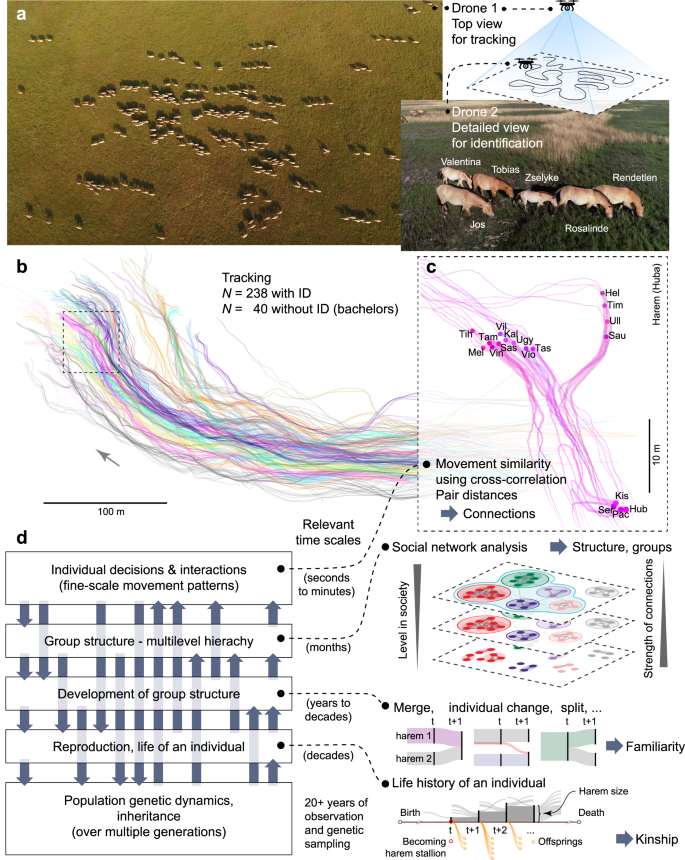
a Sample images and a sketch of the setup for 4k filming of Przewalski’s horses at Pentezug reserve, Hortobágy National Park, Hungary, in 2018 with two drones. The higher drone provides a large-scale top view for tracking individuals and the background to get coordinates and movement in an earth-fixed coordinate system (b). The lower drone scans the area with horses to get a detailed view for individual recognition. b Example trajectories of all horses belonging to the population (n = 278) from a 5-min long drone recording. Arrow shows the main direction of motion of the herd. Individuals (known identification, n = 238) are colour-coded based on the group they belong to (out of 31 harems), or shown as grey in the case of bachelor males (i.e., males that are not part of a harem, n = 40). c Detailed view of trajectories of a single harem, with all individuals shown with dots at a given point in time. Three letter codes show their identities. d Diagram of the main concept (on the left) showing important aspects of collectively living animals, and the complex interplays between these components. The components may have a relevant temporal scale (shown in the middle) that spans through several orders of magnitudes (from seconds and minutes to several decades). A detailed schematic explanation of each component is provided on the right.
Nagy AA, Erős N, Imecs I, Bóné G, Fülöp A, Pap PL 2023. Distribution and diversity of fishes and lampreys in Transylvania (Romania): a complete survey and suggestions of new protected areas. ZooKeys 1166: 351-373.
Abstract
Freshwater fishes are in a serious state of decline across the world, making them one of the most threatened groups of vertebrates. The Danube River catchment area in Europe holds the richest freshwater fish community, but our knowledge of the current distribution of these species is limited. Transylvania, the largest region of Romania, is one of the important tributaries of the Danube, from where 77 fish and two lamprey species were recorded until now. Despite this large diversity of freshwater fishes, there is a lack of systematic survey of the fish fauna in this region for the past 50 years. In this study, we present data on the occurrence and distribution of fishes and lampreys collected in Transylvania from 2007 to 2022. This data covers 43% of Romania’s surface and includes all major rivers from Transylvania. 65 species of fish and three species of lampreys are recorded, and an additional nine fish species are also reported based on information from competent people. Of the 77 fish and lamprey species recorded 19 (24.7%) are non-native, although their relative abundance was low (5.1%) compared to other similar regions in Europe. The first records of Eudontomyzon mariae, Neogobius melanostomus, Piaractus brachypomus, Pygocentrus nattereri, and Salvelinus alpinus in Transylvanian rivers are presented, as well as the first record of Cobitis elongata outside the Nera River basin (from the Caraș River) and the detection of three new populations of the vulnerable Umbra krameri. Data on changes in distribution that have occurred since the last comprehensive survey 50 years ago are also provided and the importance of our results in conservation planning are discussed, including the designation of new protected areas for freshwater bodies and the compilation of the Romanian Red List of fishes.
Keywords: Conservation, fish distribution, freshwater ichthyofauna, Natura 2000, non-native species
Nord A, Holje V, Judik B, Folkow LP and Pap PL 2023. Seasonal changes in plumage density, plumage mass and feather morphology in the world’s northernmost land bird. Polar Biology 46: 277-290. link
Abstract
The Svalbard Rock Ptarmigan, Lagopus muta hyperborea, is the only year-round resident terrestrial bird in the high Arctic. Many of the physiological and morphological adaptations permitting its winter endurance in this harsh environment are well understood. However, it remains unknown how the conspicuous moult from a greyish brown summer to a white winter plumage, and any underlying changes in plumage structure and feather morphology, contribute to seasonal acclimatisation. We used standard morphometric techniques to describe the seasonal change in plumage and feather characteristics in six body regions. Then, we investigated whether winter plumage traits differed between first-winter and adult (second winter, or older) birds, because a difference in coat insulation has been suggested as an explanation for why first-winter Svalbard Ptarmigan loose more heat than adults. Plumage feather density (i.e., feathers × cm−2) and mass density (i.e., mg feathers × cm−2) were higher in winter, particularly on the head and feet where individual feathers were also heavier, longer, and downier. Seasonal changes in other regions (back, tarsi) indicated acclimatisation primarily to resist physical wear and wind. First-winter and adult birds had similar feather densities. However, mass density in first-winter birds was significantly lower than in adults in all but one body region (back) because individual feathers weighed less. This can explain previous observations of higher heat loss rates in first-winter birds. Our study suggests that plumage acclimatisation contributes to optimising the winter phenotype of Svalbard Rock Ptarmigan, both through higher insulative capacity and by improved resistance to harsh weather. The extent of these adaptations may be determined by the time or energy available for feather growth, exemplified here by inferior insulation in first-winter birds.
Dujon AM, Vincze O, Lemaitre J-F, Alix-Panabières C, Pujol P, Giraudeau M, Ujvari B and Thomas F 2023. The effect of placentation type, litter size, lactation and gestation length on cancer risk in mammals Proceedings of the Royal Society B: Biological Sciences. 2902023094020230940. link
Abstract
Reproduction is a central activity for all living organisms but is also associated with a diversity of costs that are detrimental for survival. Until recently, the cost of cancer as a selective force has been poorly considered. Considering 191 mammal species, we found cancer mortality was more likely to be detected in species having large, rather than low, litter sizes and long lactation lengths regardless of the placentation types. However, increasing litter size and gestation length are not per se associated with an enhanced cancer mortality risk. Contrary to basic theoretical expectations, the species with the highest cancer mortality were not those with the most invasive (i.e. haemochorial) placentation, but those with a moderately invasive (i.e. endotheliochorial) one. Overall, these results suggest that (i) high reproductive efforts favour oncogenic processes’ dynamics, presumably because of trade-offs between allocation in reproduction effort and anti-cancer defences, (ii) cancer defence mechanisms in animals are most often adjusted to align reproductive lifespan, and (iii) malignant cells co-opt existing molecular and physiological pathways for placentation, but species with the most invasive placentation have also selected for potent barriers against lethal cancers. This work suggests that the logic of Peto’s paradox seems to be applicable to other traits that promote tumorigenesis.
Keywords: neoplasm, life history traits, evolution of cancer defences, comparative analysis
Ferraguti M, Magallanes S, Jiménez-Peñuela J, Martínez-de la Puente J, Garcia-Longoria L, Figuerola J, Muriel J, Albayrak T, Bensch S, Bonneaud C, Clarke RH, Czirják GÁ, Dimitrov D, Espinoza K, Ewen JG, Ishtiaq F, Flores-Saavedra W, Garamszegi LZ, Hellgren O, Horakova D, Huyvaert KP, Jensen H, Križanauskienė A, Lima MR, Lujan-Vega C, Magnussen E, Martin LB, Matson KD, Møller AP, Munclinger P, Palinauskas V, Pap PL, Pérez-Tris J, Renner SC, Ricklefs R, Scebba S, Sehgal RNM, Soler M, Szöllősi E, Valkiūnas G, Westerdahl H, Zehtindjiev P, Marzal A (2023). Environmental, geographical and time-related impacts on avian malaria infections in native and introduced populations of house sparrows (Passer domesticus), a globally invasive species. Global Ecology and Biogeography, 00, 1– 15. link
Abstract
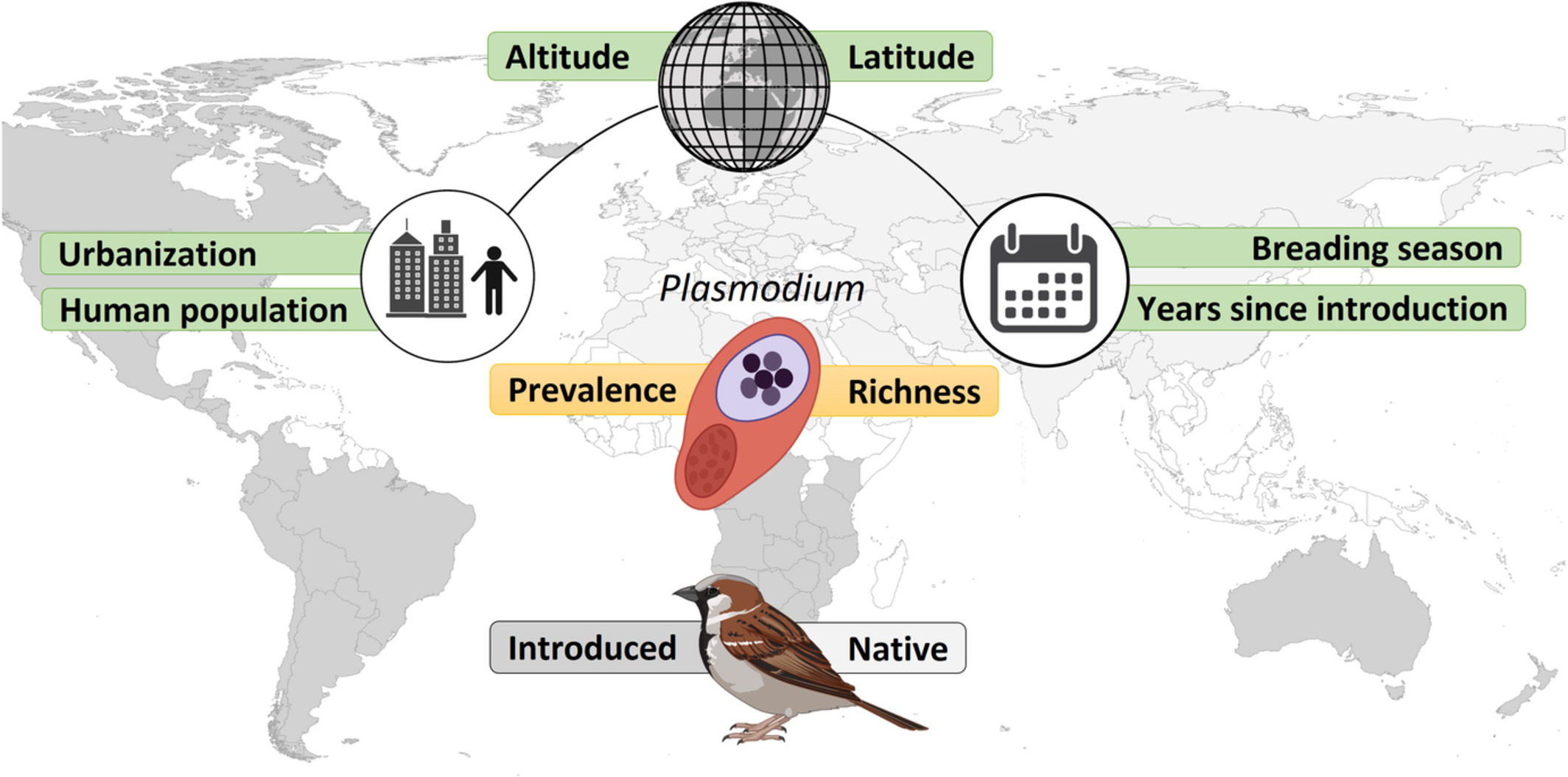
Aim: The increasing spread of vector-borne diseases has resulted in severe health concerns for humans, domestic animals and wildlife, with changes in land use and the introduction of invasive species being among the main possible causes for this increase. We explored several ecological drivers potentially affecting the local prevalence and richness of avian malaria parasite lineages in native and introduced house sparrows (Passer domesticus) populations.
Location: Global.
Time period: 2002–2019.
Major taxa studied: Avian Plasmodium parasites in house sparrows.
Methods: We analysed data from 2,220 samples from 69 localities across all continents, except Antarctica. The influence of environment (urbanization index and human density), geography (altitude, latitude, hemisphere) and time (bird breeding season and years since introduction) were analysed using generalized additive mixed models (GAMMs) and random forests.
Results: Overall, 670 sparrows (30.2%) were infected with 22 Plasmodium lineages. In native populations, parasite prevalence was positively related to urbanization index, with the highest prevalence values in areas with intermediate urbanization levels. Likewise, in introduced populations, prevalence was positively associated with urbanization index; however, higher infection occurred in areas with either extreme high or low levels of urbanization. In introduced populations, the number of parasite lineages increased with altitude and with the years elapsed since the establishment of sparrows in a new locality. Here, after a decline in the number of parasite lineages in the first 30 years, an increase from 40 years onwards was detected.
Main conclusions: Urbanization was related to parasite prevalence in both native and introduced bird populations. In invaded areas, altitude and time since bird introduction were related to the number of Plasmodium lineages found to be infecting sparrows.
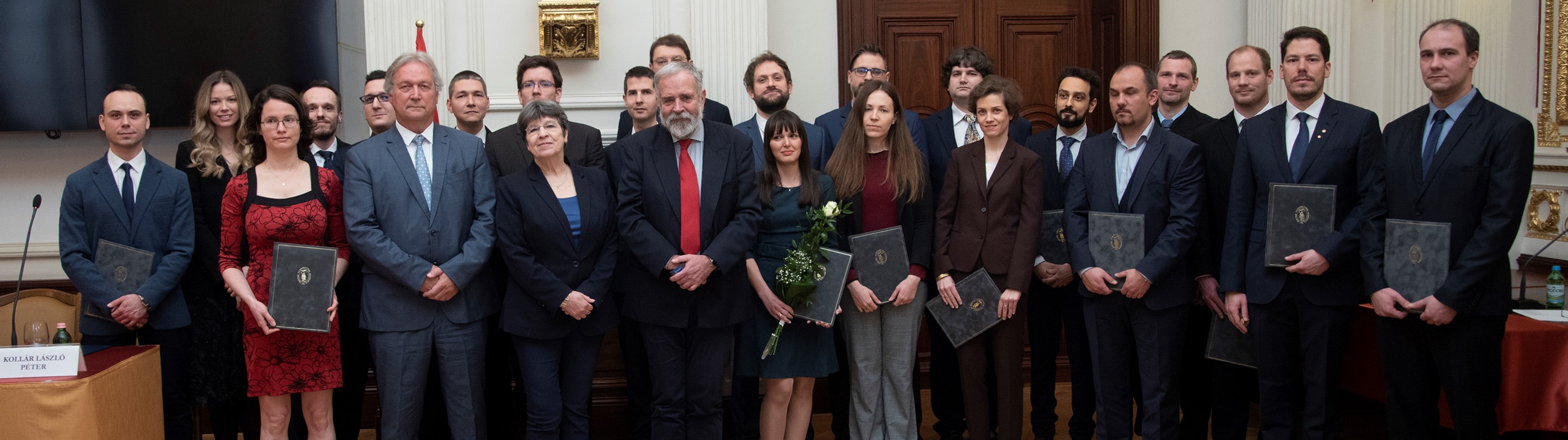
The Hungarian Academy of Sciences awarded its Youth Award to Dr. Orsolya Vincze for her study published in Nature regarding the risk of developing cancer across mammals. Dr. Vincze’s award is well-deserved, as her study provides insights into the underlying factors that contribute to cancer development in mammals. The findings could potentially inform the development of new cancer prevention and treatment strategies in humans and other animals.
Dr. Vincze is a postdoctoral researcher at the Institute of Aquatic Ecology, Centre for Ecological Research in Hungary and a founding member of the Evolutionary Ecology Group of Babeş-Bolyai University. Her research focuses on the evolution of life history traits, such as lifespan, reproductive strategies, and cancer risk, across different animal species.
Fülöp A, Lukács D and Barta Z 2022. Space use of wintering Eurasian Tree Sparrows (Passer montanus) in a semi-urban area: a radiotelemetry-based case study. Ornis Hungarica 30(2): 124–133. link
Abstract
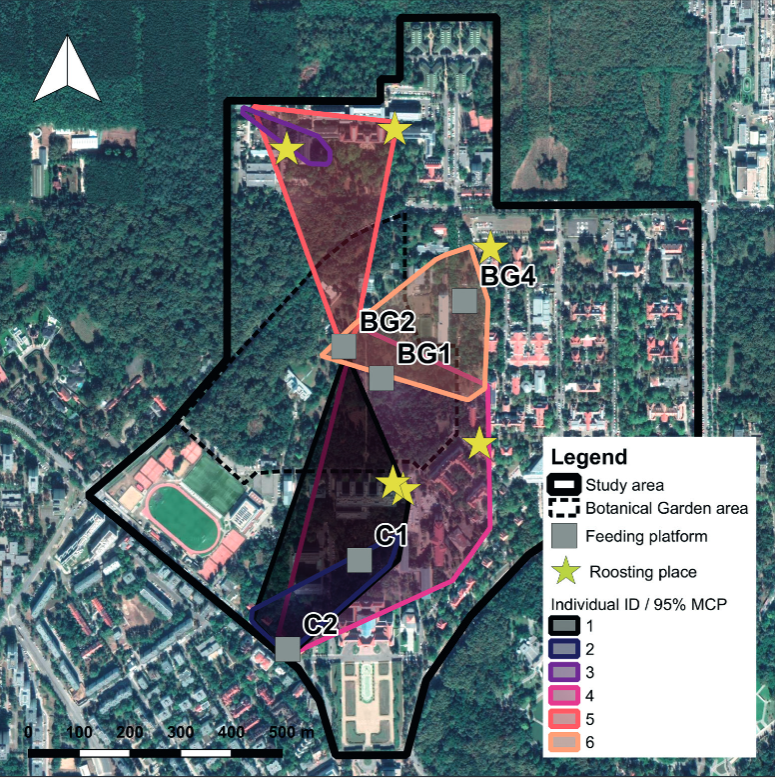
Space use, which includes the home range and habitat utilisation pattern of individuals for different activities (e.g. foraging, roosting), is one of the fundamental aspects of a species ecology. Hence, knowledge on the different aspects of space use in general is essential to understand the relationship between species and their habitat. Here, we investigated the home range size (using the minimum convex polygon method; MCP) and roosting site selection, using radiotelemetry, in a sedentary passerine species, the Eurasian Tree Sparrows (Passer montanus). The study was carried out during the non-breeding period (i.e. wintering), in a semi-urban habitat where supplemental feeding was also available. We found that individuals had highly variable home ranges, both in shape and size (mean ± SD of 95% MCP: 6.89 ± 5.73 ha), the location of which was influenced by the presence of bird feeders. Roosting sites of the tracked individuals were largely consistent at an individual level, that is, all birds used the same locations for roosting during the whole tracking period, and the roosting sites of all individuals were located on buildings, except for a few rare occasions. Our results suggest that urbanised habitats can provide multiple benefits for the individuals during the winter in the form of easily accessible resources (e.g. food, roosting place), and individuals readily exploit these resources by adjusting their space use according to their availability.
Keywords: home range, roosting, radiotelemetry, Passer montanus
Schematic illustration of the study area covering the Central Campus of the University of Debrecen (black solid line) and the Botanical Garden (black dashed line); and the home ranges and roosting sites of the six radio-tagged Eurasian Tree Sparrows (Passer montanus). The home ranges presented in the figure are based on the 95% minimum convex polygons (MCPs; indicated by the coloured polygons on the figure). The feeders used in the study are also marked (Central Campus: C; Botanical Garden: BG). The arrow on the top map is the direction of North. Background satellite image source: Google Maps.
Our article on the evolutionary relationship between oxidative physiology and plumage colouration in birds was accepted for publication in Ecology and Evolution.
Marton A§, Vágási CI§, Vincze O, Bókony V, Pap PL, Pătraș L, Pénzes J, Bărbos L, Fülöp A, Osváth G, Ducatez S¶ and Giraudeau M¶ 2022. Oxidative physiology is weakly associated with pigmentation in birds. Ecology and Evolution 12: e9177. link § Shared first authorship ¶ Shared senior authorship
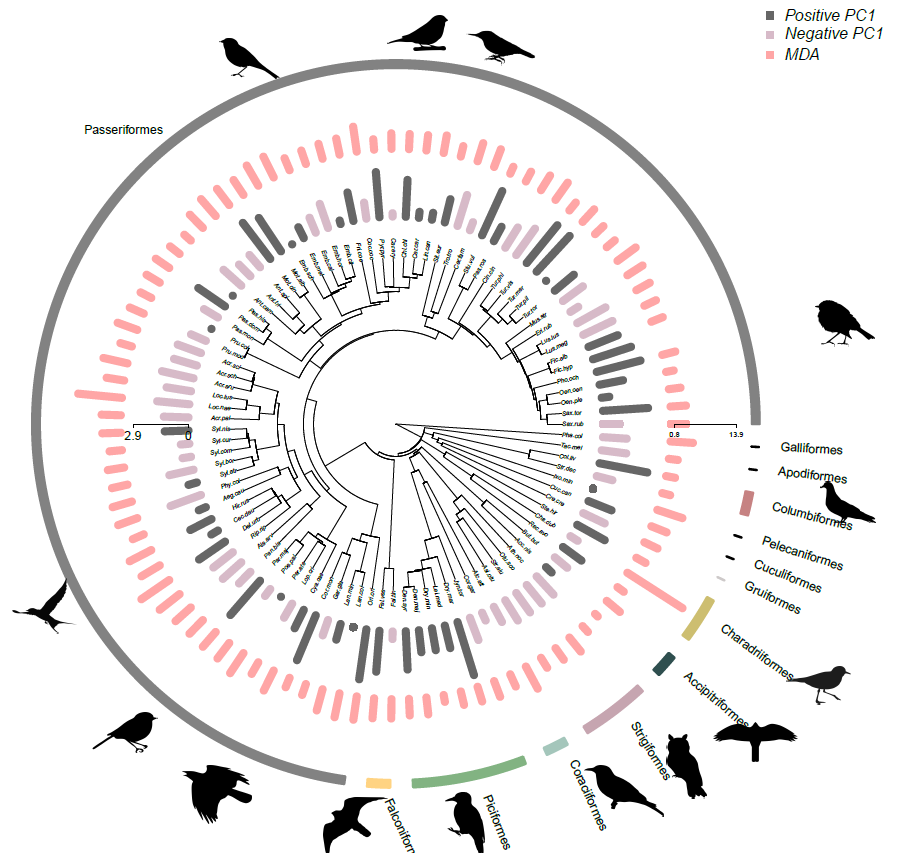
Abstract The mechanistic link between avian oxidative physiology and plumage coloration has attracted considerable attention in past decades. Hence, multiple proximal hypotheses were proposed to explain how oxidative state might covary with the production of melanin and carotenoid pigments. Some hypotheses underscore that these pigments (or their precursors, e.g., glutathione) have antioxidant capacities or function as molecules storing the toxic excess of intracellular compounds, while others highlight that these pigments can act as pro-oxidants under specific conditions. Most studies addressing these associations are at the intraspecific level, while phylogenetic comparative studies are still scarce, though needed to assess the generality of these associations. Here we tested whether plumage and bare part coloration were related to oxidative physiology at an interspecific level, by measuring five oxidative physiology markers (three non-enzymatic antioxidants and two markers of lipid peroxidative damage) in 1,387 individuals of 104 European bird species, sampled during the breeding season, and by scoring plumage eumelanin, pheomelanin and carotenoid content for each sex and species. Only the plasma level of reactive oxygen metabolites was related to melanin coloration, being positively associated with eumelanin score and negatively with pheomelanin score. Thus, our results do not support the role of antioxidant glutathione in driving variation in melanin synthesis across species. Furthermore, the carotenoid scores of feathers and bare parts were unrelated to the measured oxidative physiology parameters, further suggesting that the marked differences in pigmentation across birds does not influence their oxidative state.