Looking back on 2011


This post is not entirely related to our project financed by CNCSIS (#TE 291/2010), but provides an abstract of what we achieved in 2011 both within and out of the scope of the CNCSIS project.

The year 2011 wasn’t productive at all in terms of scientific output, as we published two papers in ornithological journals (in Auk and Ardea), one within and one out of the scope of our running project. In the paper appeared in Auk, we experimentally tested the potential costs of coccidian intestinal parasites on moult mediated by effects on condition and immune investment, while the article accepted in Ardea sought the correlates (season, age, sex, feather quality) of feather abnormalities. And now are coming the “Howevers”. We won’t explain why only two papers were published in 2011, it is obviously our fault, but outline what else we did that hopefully will result in publications in the near future.

We analysed or are en route in analysing some past data about (1) the evolution of innate immunity in European birds by looking for allometry, life-history, ecology and behaviour as explanatory variables with a phylogenetic comparative approach; (2) the evolution of sex ratio and sexual size dimorphism in three closely related Ischnoceran lice species that parasitize house sparrows (Passer domesticus L.) but have contrasting abundance, prevalence and mobility; (3) the effect of experimentally accelerated moult rate on flight and body feather quality in a non-migratory passerine, the house sparrow; (4) the potential armament function of depigmented white wing-bar of male house sparrows.

We also successfully finished 4 studies (3 experimental and 1 correlative) on house sparrows about (1) the multifaceted effects of coccidiosis on host’s seasonal immune cycling, condition, health, plumage ornamentation, moult and feather quality by also testing sexual inequalities; (2) the multiple function of uropygial gland and its oily secretion in sustaining plumage quality and their potential role played as cosmetics by increasing the showiness of plumage ornaments; (3) the stress and oxidative physiology correlates of plumage advertisements; (4) stress-induced modulation of social behaviour (aggressiveness, feeding). Further, we collected blood samples from many central European species for addressing questions about the evolution of oxidative homeostasis.

Thus, we trust to attain a better sabbatical in 2012. For this, we also aim higher concerning the plans for 2012.

The above results would have not been possible to reach without the altruistic help of a large number of undergrad and master students recruited in our Evolutionary Ecology Group at the University of Babeş-Bolyai, Cluj Napoca, Romania. They undoubtedly get experience in many field and lab tasks. Beyond, they are members of author board in manuscripts which paves the way for a fruitful scientific career.
Posted in Uncategorized | Leave a comment

News #8


We’ve just launched our next experiment on coccidiosis looking for the possible transmission of isosporan parasites between members of closely related species, house (Passer domesticus) and tree sparrow (P. montanus). Provided that (1) the two species often form mixed flocks both in rural and urban areas and (2) coccidians are transmitted via faecal–oral route, it seems reasonable to expect cross-infestation to occur. Beyond testing this, we examine what physiological effects do have, if any, the coccidians of house sparrows on tree sparrows and inversely.

Posted in Uncategorized | Leave a comment

News #7


We just finished an experiment within the frame of our running research grant. It was the longest experiment carried out ever by our Evolutionary Ecology group. It lasted 15 months and focused on coccidian infestation and immunity annual cycle in house sparrows. The preliminaries of a part of the data (except the last sampling, October 2011) was presented in Riga, Latvia (see the previous News post).

Posted in Uncategorized | Leave a comment

News #6


Recently, we participated at two international ornithological and ecological conferences with data gathered within our grant:

(1) Pap PL, Vágási CI, Sesarman A, Banciu M. Seasonality in coccidian parasitism and immune function in the house sparrow: natural covariation or just coincidence? 8th Conference of the European Ornithologists’ Union, 27-30 August 2011, Riga, Latvia
(2) Pap PL, Vágási CI, Vincze O, Osváth G, Veres-Szászka J, Czirják GÁ. The evolution of constitutive immune defence in relation to life-history and parasitism in European birds. 12th European Ecological Federation Congress, 25-29 September 2011, Ávila, Spain

Posted in Uncategorized | Leave a comment

News #5


Our second article within this project had been published in Auk (an ornithological journal of the American Ornithologists’ Union).

Pap PL, Vágási CI, Czirják GÁ, Titilincu A, Pintea A, Osváth G, Fülöp A and Barta Z 2011. The effect of coccidians on the condition and immune profile of molting house sparrows (Passer domesticus). Auk 128: 330–339.

Posted in Uncategorized | Leave a comment

News #4


Two recently compiled special issues on ecological immunology highlight the importance and caveats of this domain, and pave the way for future directions. These were published in two prestigious journals, one in Philosophical Transactions of the Royal Society of London, Biological Sciences about one year ago, while the other this month in Functional Ecology. It is also noteworthy another recent special issue in Functional Ecology, which deals with a similarly hot topic, namely oxidative stress.

Posted in Uncategorized | Leave a comment

News #3


Our second manuscript within the framework of this project was accepted for publication in Auk (an ornithological journal of the American Ornithologists’ Union).

Posted in Uncategorized | Leave a comment

News #2


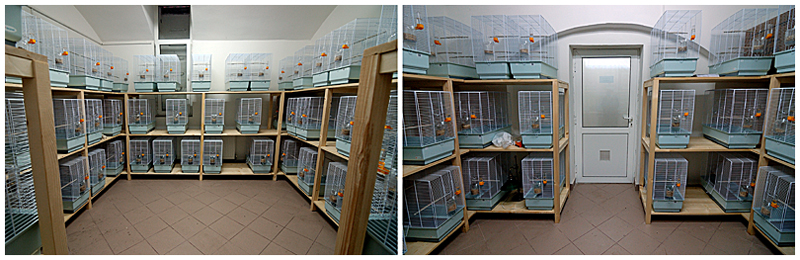
We installed the cages in the Ornithology Lab at the campus of Babeş-Bolyai University. These render possible the individual caging of birds held in captivity, which is necessary in certain experiments (e.g., faeces samples for measuring parasite intensity).

Posted in Uncategorized | Leave a comment

News #1


Our second manuscript within the framework of this project was submitted with minor revisions to Auk (an ornithological journal of the American Ornithologists’ Union). In this study, we aimed to explore (1) which immune branche(s) of the hosts is (are) important in combating coccidian infections and (2) how these endoparasites effect the flight feathers of the hosts.

Posted in Uncategorized | Leave a comment

Aims


This site is dedicated to a research grant (#PN II. RU TE 291/2010) financed by the Romanian Ministry of Education and Research.

Beyond information related to this project, ibidem we will post news about the achievements of our Evolutionary Ecology Group (Babeş-Bolyai University, Cluj Napoca, Romania).

Posted in Uncategorized | Leave a comment