Authors marked in boldface are EvolEcol members.
Vincze O, Kosztolányi A, Barta Z, Küpper C, Alrashidi M, Amat JA, Argüelles Ticó A, Burns F, Cavitt J, Conway WC, Cruz-López M, Desucre-Medrano AE, dos Remedios N, Figuerola J, Galindo-Espinosa D, García-Peña GE, Gómez Del Angel S, Gratto-Trevor C, Jönsson P, Lloyd P, Montalvo T, Parra JE, Pruner R, Que P, Liu Y, Saalfeld ST, Schulz R, Serra L, St Clair JJH, Stenzel LE, Weston MA, Yasué M, Zefania S and Székely T 2017. Parental cooperation in a changing climate: fluctuating environments predict shifts in care division. Global Ecology and Biogeography (in press) doi:10.1111/geb.12540.
Abstract
Aim
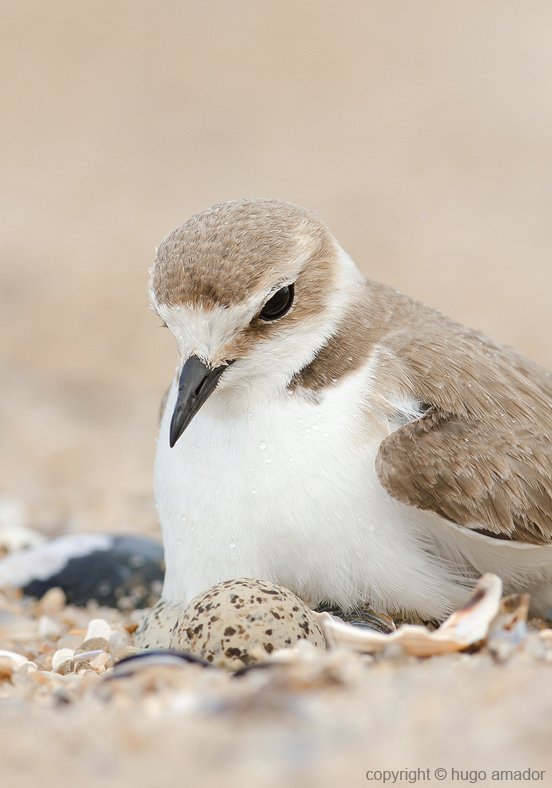
Parental care improves the survival of offspring and therefore has a major impact on reproductive success. It is increasingly recognized that coordinated biparental care is necessary to ensure the survival of offspring in hostile environments, but little is known about the influence of environmental fluctuations on parental cooperation. Assessing the impacts of environmental stochasticity, however, is essential for understanding how populations will respond to climate change and the associated increasing frequencies of extreme weather events. Here we investigate the influence of environmental stochasticity on biparental incubation in a cosmopolitan ground-nesting avian genus.
Location
Global.
Methods
We assembled data on biparental care in 36 plover populations (Charadrius spp.) from six continents, collected between 1981 and 2012. Using a space-for-time approach we investigate how average temperature, temperature stochasticity (i.e. year-to-year variation) and seasonal temperature variation during the breeding season influence parental cooperation during incubation.
Results
We show that both average ambient temperature and its fluctuations influence parental cooperation during incubation. Male care relative to female care increases with both mean ambient temperature and temperature stochasticity. Local climatic conditions explain within-species population differences in parental cooperation, probably reflecting phenotypic plasticity of behaviour.
Main conclusions
The degree of flexibility in parental cooperation is likely to mediate the impacts of climate change on the demography and reproductive behaviour of wild animal populations.