Paper about feather-damaging bacteria accepted in Ibis


Authors marked in bold are EvolEcol members.

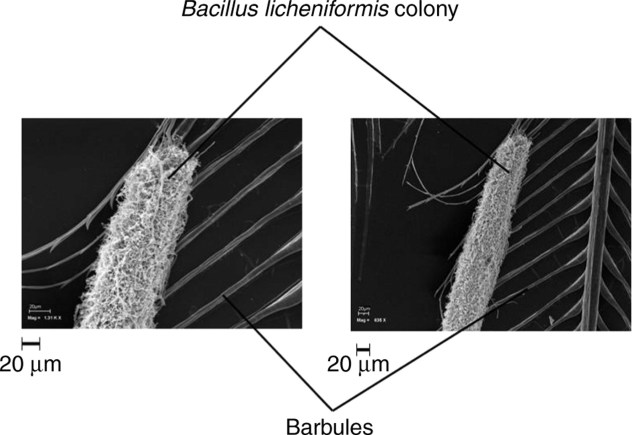
Fülöp A, Czirják GÁ, Pap PL and Vágási CI 2016. Feather-degrading bacteria, uropygial gland and feather quality in House Sparrows Passer domesticus. Ibis (in press).

Abstract: Feathers are dead integumentary structures that are prone to damage and thus show gradual degradation over the course of a year. This loss of quality might have negative fitness consequences. Feather-degrading bacteria (FDB) are one of the most prevalent organisms that degrade feathers, yet the relationship between FDB load and flight feather quality has rarely been assessed. We studied this relationship in free-living House Sparrows Passer domesticus during two different annual lifecycle stages (breeding and non-breeding). We also considered the size of the uropygial gland (UG), given the antimicrobial function of its secretions, and the effect of body condition. We found that the number of feather holes was positively associated with FDB load and was negatively related to UG size and body condition during the breeding season in both sexes. In the non-breeding season we recovered the same relationships, but only in females. The degree of feather wear was unrelated to any of the variables measured during the breeding season, while it was negatively associated with UG size and positively with FDB load in the non-breeding season, but only in females. Our results suggest that FDB may induce the formation of feather holes, but only play a minor role in the abrasion of flight feathers.

Keywords: keratinolytic microorganisms, preen oil, feather hole, feather wear, feather structure
f1-large

Image source: Journal of Experimental Biology
Posted in Uncategorized | Leave a comment

Evolution Day


24th of November

Today we celebrate the 156th anniversary of Charles R. Darwin’s masterpiece, On the Origin of Species getting published. Happy holiday!

We are also happy to announce that the Hungarian Ethological Society awarded the prize of Best Young Researcher to our former group member, Orsolya Vincze. She published several evolutionary biology papers the last year. Congratulations!

We are not that happy that today was one manuscript of our team rejected from Evolution. 🙂

Posted in Uncategorized | Leave a comment

Paper on neuroecology of migratory birds accepted in Biology Letters


Authors marked in bold are EvolEcol members.

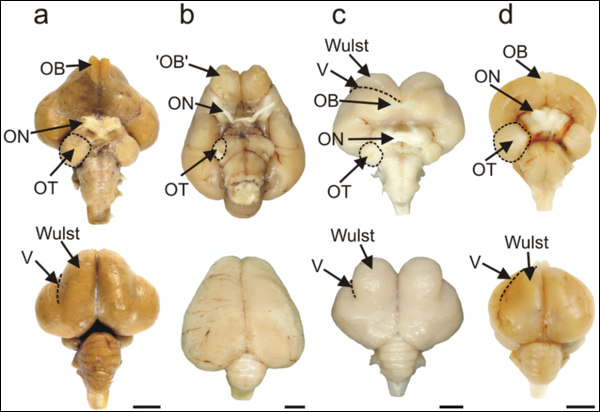
Vincze O, Vágási CI, Pap PL, Osváth G and Møller AP 2015. Brain regions associated with visual cues are important for bird migration. Biology Letters (in press).

Abstract: Long-distance migratory birds have relatively smaller brains than short-distance migrants or residents. Here, we test whether reduction in brain size with migration distance can be generalized across the different brain regions suggested to play key roles in orientation during migration. Based on 152 bird species, belonging to 61 avian families from 6 continents, we show that the sizes of both the telencephalon and the whole brain decreases, and the relative size of the optic lobe increases, while cerebellum size does not change with increasing migration distance. Body mass, whole brain size, optic lobe size and wing aspect ratio together account for a remarkable 46% of interspecific variation in average migration distance across bird species. These results indicate that visual acuity might be a primary neural adaptation to the ecological challenge of migration.

Keywords: brain mass, cerebellum, migration distance, neuroecology, optic lobe, telencephalon

Bird_visual_processing_areas
Image source: http://people.eku.edu/ritchisong/birdbrain.html

Posted in Uncategorized | Leave a comment

Chituc Ringing Camp, Romania


Many beautiful birds, nice location, good company. Watch this short movie.

This camp also helped us to gather data that were used in phylogenetic comparative analyses about feather structure and wing morphology.

Further details about the ringing camp can be found here.

Posted in Uncategorized | Leave a comment

Paper on bird migration accepted in Evolutionary Biology


Authors marked in bold are EvolEcol members.

Vágási CI, Pap PL, Vincze O, Osváth G, Erritzøe J and Møller AP 2015. Morphological adaptations to migration in birds. Evolutionary Biology (in press).

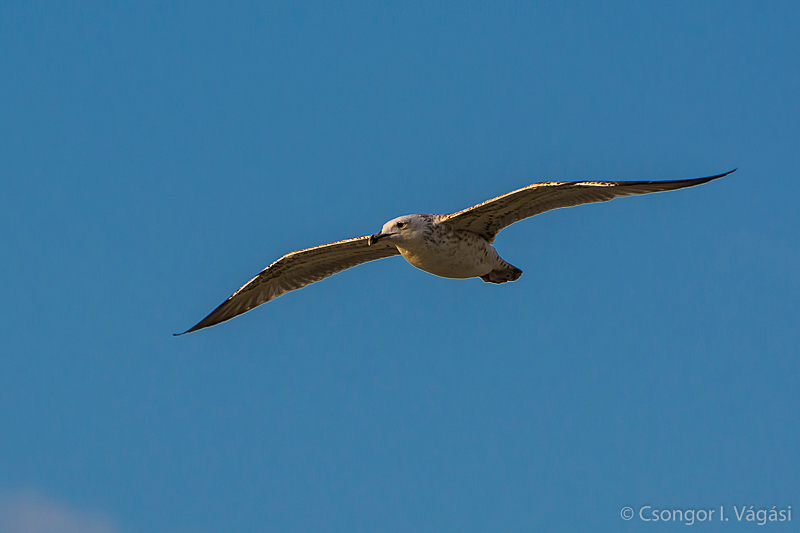
Abstract: Migratory flight performance has direct or carry-over effects on fitness. Therefore, selection is expected to act on minimizing the costs of migratory flight, which increases with the distance covered. Aerodynamic theory predicts how morphological adaptations improve flight performance. These predictions have rarely been tested in comparative analyses that account for scaling and phylogenetic effects. We amassed a unique dataset of 149 European bird species and 10 morphological traits. Mass-adjusted aspect ratio increased, while mass-adjusted heart weight and wing loading decreased with increasing migration distance. These results were robust to whether the analyses were based on the entire species pool or limited to passerines or migrants. Our findings indicate that selection due to migration acts on wing traits that reduce the energetic cost of transportation to increase the flight range. Consequently, the demands for high ‘exercise organ’ performance might be low, and hence such energetically expensive tissues are not associated (pectoral muscle) or are inversely associated (heart) with long migration distance.

Keywords: aerodynamics, functional morphology, ‘migratory syndrome’, organ size, phylogenetic comparative analysis, wing morphology

gull_aspect_ratio

Posted in Uncategorized | Leave a comment

Paper accepted in Vector-Borne and Zoonotic Diseases


Authors marked in bold are EvolEcol members.

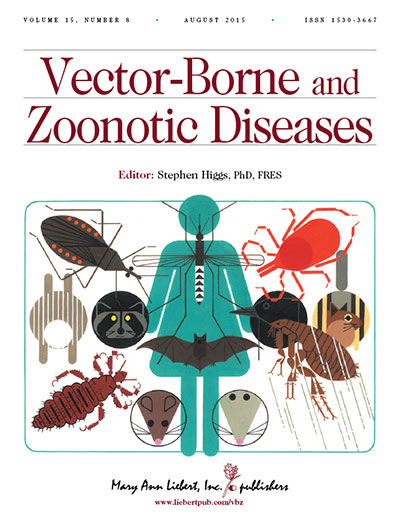
Paștiu AI, Pap PL, Vágási CI, Niculae M, Páll E, Brudașcă FG and Spînu M 2015. Wild birds in Romania are more exposed to West Nile virus than to Newcastle Disease virus. Vector-Borne and Zoonotic Diseases (in press).

Abstract: Numerous bird species are carriers of potentially pathogenic bacteria, viruses and/or parasites of veterinary or zoonotic importance, thus significantly contributing to the geographic distribution of these pathogens. The aim of this study was to evaluate the seroprevalence of West Nile and Newcastle Disease viruses in wild and domestic birds from Romania. During 2011–2014, 159 plasma samples from wild birds assigned to 11 orders, 27 families and 61 species and from 21 domestic birds (Gallus gallus domesticus; Anas platyrhynchos) were collected. The sera were assayed by two commercial cELISA kits for antibodies against West Nile and Newcastle Disease viruses. We found high prevalence of West Nile virus antibodies in both domestic (19.05%) and wild (32.14%) birds captured after the human epidemic in 2010. Moreover, the presence of anti-Newcastle Disease virus antibodies among wild birds from Romania (5.41%) was serologically confirmed for the first time, as far as we are aware. Our findings provide evidence that wild birds are involved in local West Nile and Newcastle Disease enzootic and epizootic cycles. These may allow the virus maintenance and spread and also enhance the chance of new outbreaks.

Keywords: West Nile virus, Newcastle Disease virus, wild birds, Romania

vbzd_cover

Posted in Uncategorized | Leave a comment

Our paper highlighted in Functional Ecology


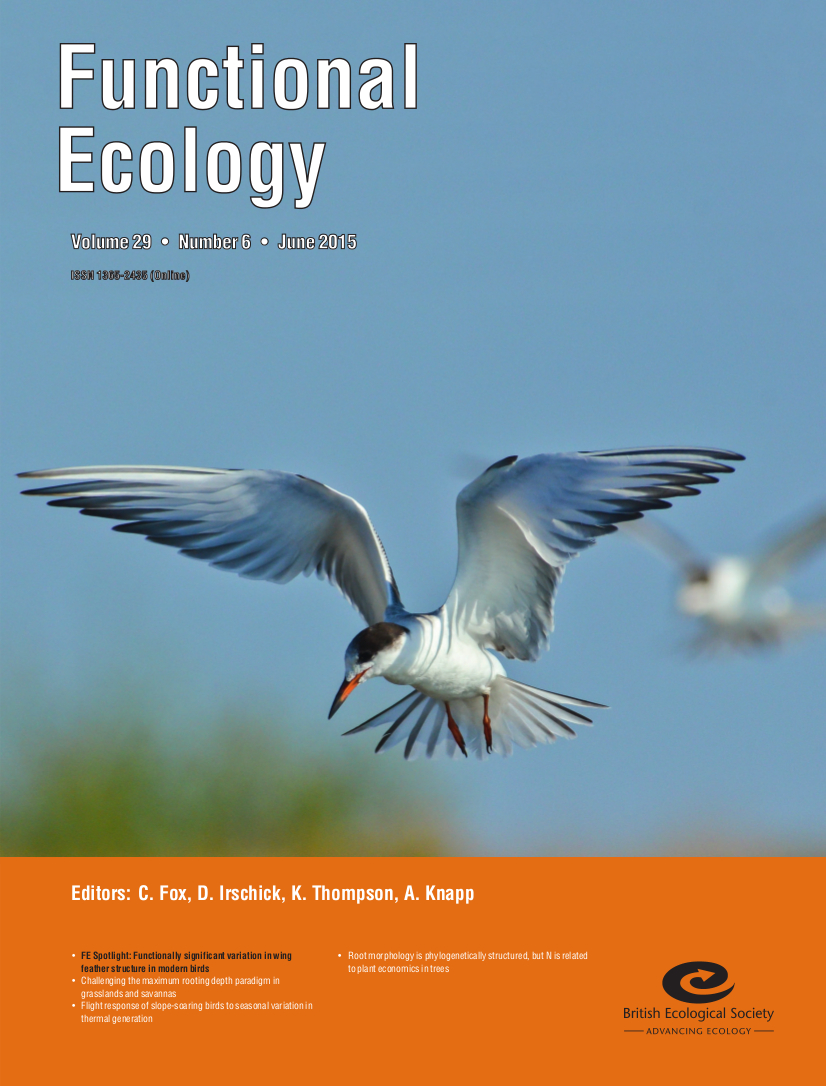
Our paper on the functional morphology of flight feathers was appreciated by a Functional Ecology Spotlight written by Luke K. Butler. Moreover, the cover image of the issue shows a common tern Sterna hirundo hovering above the water of the Black Sea and was taken by Sebastian Bugariu, our colleague from the Romanian Ornithological Society.

FE29.6_cover

Posted in Uncategorized | Leave a comment

Paper on feather structure accepted in PLoS ONE


Our results show that the material and structural properties of wing and tail feathers of barn swallows change as a result of aerodynamic forces and sexual selection, although the result of these changes can be contrasting. Authors marked by boldface are EvolEcol members.

Pap PL, Osváth G, Aparicio JM, Bărbos L, Matyjasiak P, Rubolini D, Saino N, Vágási CI, Vincze O and Møller AP 2015. Sexual dimorphism and population differences in structural properties of barn swallow (Hirundo rustica) wing and tail feathers. PLoS ONE (in press).

Astract: Sexual selection and aerodynamic forces affecting structural properties of the flight feathers of birds are poorly understood. Here, we compared the structural features of the innermost primary wing feather (P1) and the sexually dimorphic outermost (Ta6) and monomorphic second outermost (Ta5) tail feathers of barn swallows (Hirundo rustica) from a Romanian population to investigate how sexual selection and resistance to aerodynamic forces affect structural differences among these feathers. Furthermore, we compared structural properties of Ta6 of barn swallows from six European populations. Finally, we determined the relationship between feather growth bars width (GBW) and the structural properties of tail feathers. The structure of P1 indicates strong resistance against aerodynamic forces, while the narrow rachis, low vane density and low bending stiffness of tail feathers suggest reduced resistance against airflow. The highly elongated Ta6 is characterized by structural modifications such as large rachis width and increased barbule density in relation to the less elongated Ta5, which can be explained by increased length and/or high aerodynamic forces acting at the leading tail edge. However, these changes in Ta6 structure do not allow for full compensation of elongation, as reflected by the reduced bending stiffness of Ta6. Ta6 elongation in males resulted in feathers with reduced resistance, as shown by the low barb density and reduced bending stiffness compared to females. The inconsistency in sexual dimorphism and in change in quality traits of Ta6 among six European populations shows that multiple factors may contribute to shaping population differences. In general, the difference in quality traits between tail feathers cannot be explained by the GBW of feathers. Our results show that the material and structural properties of wing and tail feathers of barn swallows change as a result of aerodynamic forces and sexual selection, although the result of these changes can be contrasting.

Posted in Uncategorized | Leave a comment

World Sparrow Day


Today, 20 March is the World Sparrow Day!

The official website dedicated to this holiday can be found here:

http://www.worldsparrowday.org/

Our post the last year related to WSD:

Tribute to sparrows

Darwin bless all the sparrows!

Posted in Uncategorized | Leave a comment

Paper on biological invasions accepted


Not exactly within the profile of our group, not exactly about birds, but still flight-capable organisms. This time a more applied study about biological invasions.

Biological invasion is considered as one of the major threats for biodiversity. We studied the impact of a massive invasion by Canada goldenrod Solidago canadensis on highly diverse native plant communities and their pollinators in the largest Natura 2000 site in Romania. We found considerable adverse effects of S. canadensis invasion on both native plant and pollinator communities. The manuscript submitted to Basic and Applied Ecology was accepted for publication. Author marked by boldface is EvolEcol member.

Fenesi A, Vágási CI, Beldean M, Földesi R, Kolcsár L-P, Shapiro JT, Török E and Kovács-Hostyánszki A 2015. Solidago canadensis impacts on native plant and pollinator communities in different-aged old fields. Basic and Applied Ecology (in press).

Abstract: Secondary succession in former arable fields (i.e. old-fields) might be altered by the colonization of invasive alien species, with possible community-wide impacts which hamper old-fields’ potential to become species-rich communities. However, the effects of invasive species on local communities have rarely been addressed in the light of secondary succession. Therefore, we studied the impact of the highly invasive Solidago canadensis on plant and pollinator communities along a gradient of invasion severity in old-fields with different age (1–20 years since last ploughing) in Southern Transylvania, Romania. We asked whether (1) the invasion of S. canadensis causes shifts in the composition and diversity of plant communities, and (2) pollinator communities along the successional gradient; and (3) to what extent does the presence of S. canadensis affects flower visitation of native plant species by pollinators? According to our results, the invasion reduced the native plant species richness throughout succession, although the most profound negative effect on plant diversity and vegetation naturalness was exerted in older successional communities. The invasion of S. canadensis had a negative effect on the abundance of bees irrespective of the old-field age; however, there was no similar negative effect on hoverflies. Native flowers experienced reduced visitation by wild bees, honey bees and hoverflies due to the augmented presence of S. canadensis. Therefore, the trajectory of vegetation succession is diverted, and the mutualistic links between the native elements of these old-fields are altered due to the invasion of this perennial plant species and non-desired alternative stable states can be installed.

Key words: Canada goldenrod, plant invasion, plant–pollinator interaction, fallow, set-aside, Apis, Romania, Natura 2000, biodiversity conservation

Posted in Uncategorized | Leave a comment