Tribute to sparrows


Today, 20 March, is the World Sparrow Day. We pay a tribute to house sparrows Passer domesticus for being cute collaborators in our projects.

For more information about WSD, check the official website. The site and the WSD are meant to raise public awareness regarding the collapse of some house sparrow populations. See e.g. the case in the UK here and here, and two reviews here and here. More references can be found here. These studies show that even the populations of a relatively generalist and human-tolerant species can be doomed to severe decline due to changes in land-use.

Fortunately, the population trend of the house sparrow in Romania is stable and population sizes are large all over the country. Indeed, the potential causes of population declines identified in Western Europe are still relatively negligible in our country. Still because there are clear signs that the intensification of land-use will take a similar path to what occurred in Western Europe some decades before. We hope that WSD will attain its major scope and thus contribute to prevent the most pessimistic scenario.

Happy WSD!

Posted in Uncategorized | 1 Comment

News #33


A Point-of-View about the use of feather holes as surrogate measure of phthirapteran lice infestation was accepted for publication in Journal of Avian Biology.

Vágási CI 2014. The origin of feather holes: a word of caution. Journal of Avian Biology (in press).

Abstract:
Antagonistic processes between parasites and their hosts are hallmarks of evolutionary ecology. A group of parasites is adapted to feed on feather keratin. In doing so, they inflict a variety of costs on avian hosts by causing feathers to degrade faster. Feather holes represent a class of feather damage that is attributed to the chewing bites of Phthirapteran lice. Consequently, hole counts were used as an approximation of lice infestation intensity when studying bird–lice interaction. Here, I express some reservations regarding this practice. I survey the literature concerning feather holes and the state of the hole–lice concept, highlight some uncertainties regarding its reliability, offer possible alternative explanations for the origin of holes, and suggest directions for future investigations. I conclude that the origin of holes is still unknown, and so a prudent approach is desirable when interpreting the relationship between avian phenotype or fitness and lice infestation inferred from hole counts.

Posted in Uncategorized | 1 Comment

News #32


In a previous News post we presented a long-term experiment in which infestation by an intestinal unicellular parasite (Isospora coccidian) was manipulated in a group of house sparrows (medicated with anticoccidial drug), while another group served as control (not medicated, infestation level similar to natural levels). The experiment lasted 15 months and so covered two moulting periods and more than a whole annual cycle. We found differences between groups in several feather quality variables, while moult schedule was independent of treatment.

In an accompanying study we asked whether different physiological measures (immune system and redox state) show annual cycling and whether this annual is governed by coccidian infestation. We found significant variation in 10 out of 12 traits over the year. However, we found little support for the parasite-mediated change in immune functions and oxidative status in captive house sparrows. Of the 12 measures, only one was slightly affected by the parasite treatment. In support of the absence of any effect of coccidians on the annual profile of the condition and physiological traits, we found no consistent relationships between the intensity of infestation and these response variables over the year. Our results show that chronic coccidian infections have limited effect on the seasonal changing of physiological traits, and that the patterns of these measures are probably more affected by acute infection and/or by virulent parasite strains. We submitted the manuscript in Physiological and Biochemical Zoology, where, based on the positive feedback by two reviewers, was provisionally accepted (minor revision).

The study was financed by a CNCSIS research grant (PN II. RU TE 291/2010).

Pap PL, Sesarman A, Vágási CI, Buehler DM, Pătraș L, Versteegh MA and Banciu M 2014. No Evidence for Parasitism-linked Changes in Immune Function or Oxidative Physiology over the Annual Cycle of an Avian Species.

Posted in Uncategorized | 2 Comments

News #31


New paper published in collaboration with several scientists.

Møller AP, Merino S, Soler JJ, Antonov A, Badás EP, Calero-Torralbo MA, de Lope F, Eeva T, Figuerola J, Flensted-Jensen E, Garamszegi LZ, González-Braojos S, Gwinner H, Hanssen SA, Heylen D, Ilmonen P, Klarborg K, Korpimäki E, Martínez J, Martínez-de la Puente J, Marzal A, Matthysen E, Matyjasiak P, Molina-Morales M, Moreno J, Mousseau TA, Nielsens JT, Pap PL, Rivero-de Aguilar J, Shurulinkov P, Slagsvold T, Szép T, Szöllősi E, Török J, Vaclav R, Valera F, Ziane N 2013. Assessing the Effects of Climate on Host-Parasite Interactions: A Comparative Study of European Birds and their Parasites. PLoS ONE 8: e82886.

Background

Climate change potentially has important effects on distribution, abundance, transmission and virulence of parasites in wild populations of animals.

Methodology/Principal Finding

Here we analyzed paired information on 89 parasite populations for 24 species of bird hosts some years ago and again in 2010 with an average interval of 10 years. The parasite taxa included protozoa, feather parasites, diptera, ticks, mites and fleas. We investigated whether change in abundance and prevalence of parasites was related to change in body condition, reproduction and population size of hosts. We conducted analyses based on the entire dataset, but also on a restricted dataset with intervals between study years being 5–15 years. Parasite abundance increased over time when restricting the analyses to datasets with an interval of 5–15 years, with no significant effect of changes in temperature at the time of breeding among study sites. Changes in host body condition and clutch size were related to change in temperature between first and second study year. In addition, changes in clutch size, brood size and body condition of hosts were correlated with change in abundance of parasites. Finally, changes in population size of hosts were not significantly related to changes in abundance of parasites or their prevalence.

Conclusions/Significance

Climate change is associated with a general increase in parasite abundance. Variation in laying date depended on locality and was associated with latitude while body condition of hosts was associated with a change in temperature. Because clutch size, brood size and body condition were associated with change in parasitism, these results suggest that parasites, perhaps mediated through the indirect effects of temperature, may affect fecundity and condition of their hosts. The conclusions were particularly in accordance with predictions when the restricted dataset with intervals of 5–15 years was used, suggesting that short intervals may bias findings.
Posted in Uncategorized | Leave a comment

2013 in review by WordPress


The WordPress.com stats helper monkeys prepared a 2013 annual report for this blog.

Here’s an excerpt:

A San Francisco cable car holds 60 people. This blog was viewed about 2,500 times in 2013. If it were a cable car, it would take about 42 trips to carry that many people.

Click here to see the complete report.

Posted in Uncategorized | Leave a comment

Looking back on 2013


This post provides an abstract of what we achieved in 2013 both within and out of the scope of our CNCSIS grant (#TE 291/2010), which ran out by the end of 2013.

The year 2013 was the most productive (in terms of scientific output) in the life of the Evolutionary Ecology Group. Six articles were accepted for publication. We showed that (i) among three phthirapteran lice species infesting house sparrows, the most prevalent one has the more egalitarian sex ratio and the least pronounced female-biased sexual size dimorphism (Pap et al. 2013 J Parasitol 99: 24–30), (ii) coccidian infestation has both short- and long-term adverse effects on flight feather quality of house sparrows (Pap et al. 2013 Biol J Linn Soc 108: 414–428), (iii) the absence of the uropygial gland, and thus blocked access to preen oils, did not result in increased feather-degrading bacteria load, but to increased other cultivable bacteria load on the plumage of house sparrows (Czirják et al. 2013 Naturwissenschaften 100: 145–151), (iv) in a comparison across 63 bird species, risk-taking behaviour expressed as flight initiation distance (FID) has physiological and morphological bases, as species with long FID relative to body size have lower haematocrit value and larger wing area and wing aspect ratio (Møller et al. 2013 J Evol Biol 26: 1143–1150), (v) in a comparison across 132 bird species, species potentially exposed to higher bacterial infestation risk (in terms of large total eggshell surface area, social breeding, humid habitat) have larger relative uropygial gland size (Vincze et al. 2013 Biol J Linn Soc 110: 543–563) and (vi) in house sparrows, higher problem-solving performance is facilitated by good health, namely higher levels of an endogenous antioxidant (glutathione), and lower levels of stress hormone (corticosterone) and coccidian infestation intensity (Bókony et al. 2014 Behav Ecol 25: 124–135).

Beyond these, we have two manuscripts submitted for review and several recently closed projects, which await for data analysis and manuscript preparation. The manuscripts are about the physiological effects of coccidian infestation during the annual cycle on the one hand, and the potential causes of feather holes on the other hand. Major projects on the pipe are: (i) the evolution of feather structure (phylogenetic comparative), (ii) adaptations to migration (phylogenetic comparative), (iii) costs of malaria infestation (multiple house sparrow populations), (iv) function of the uropygial gland (experiment with house sparrows), (v) costs of chronic physiological stress (experiment with house sparrows), (vi) physiological correlates of costly phenotypic traits (phylogenetic comparative), (vii) physiological costs of moult (experiment with house sparrows), (viii) repeatability of feather mite intensity and prevalence (phylogenetic comparative).

So, we trust to attain at least a similar sabbatical in 2014.

The above results would have not been possible to reach without the altruistic help of a large number of undergrad and master students recruited in our Evolutionary Ecology Group at the University of Babeş-Bolyai. Thank you again!

Posted in Uncategorized | Leave a comment

News #30


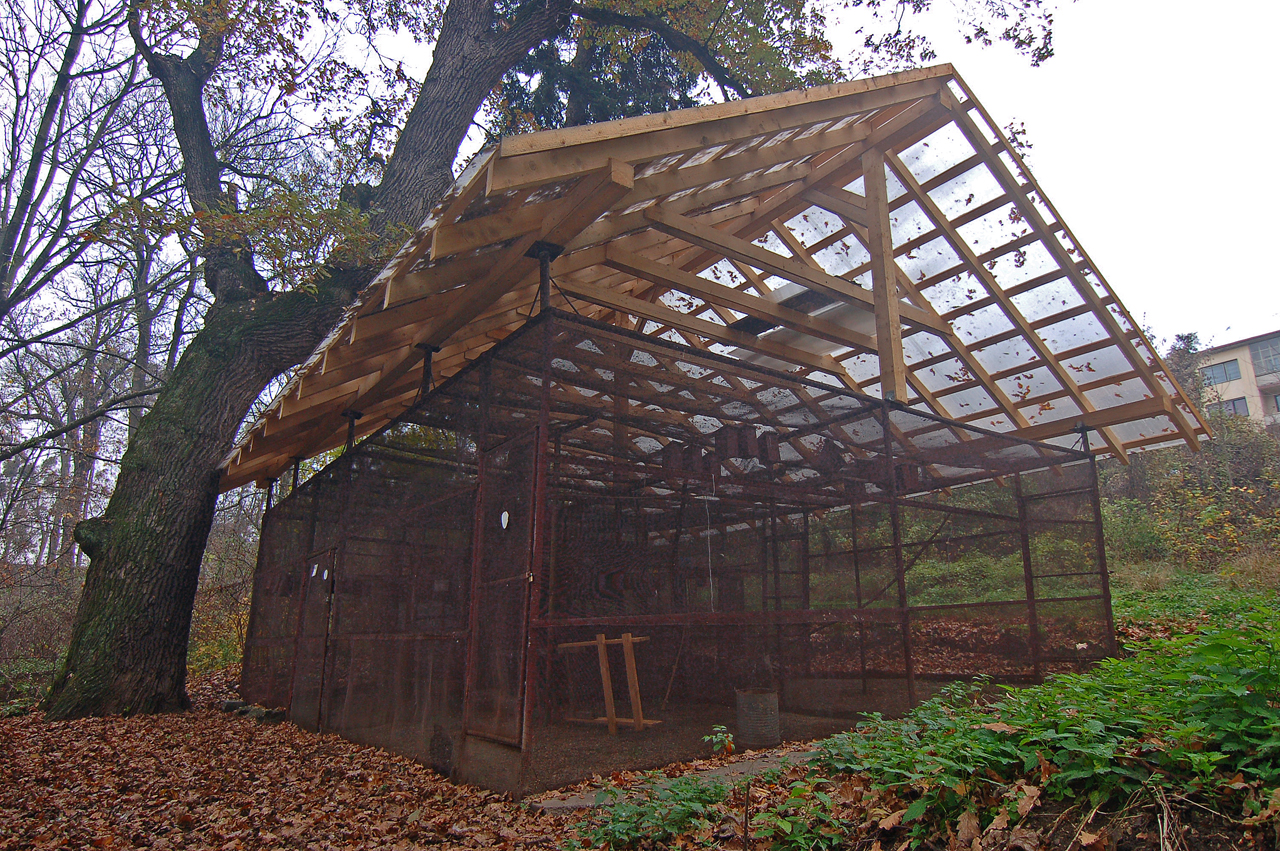
We upgraded the two outdoor aviaries located at the campus of Babes-Bolyai University. House sparrows confined here had only small rainproof shelters until now. The current brand new roof protects the birds and the aviaries’ structure as well. The transparent roof material also lets the natural lighting into the aviaries. This development was supported by a CNCSIS grant (PN II. RU TE 291/2010).
aviary

Posted in Uncategorized | Leave a comment

News #29


Our manuscript mentioned earlier (see News #25 & #28) was finally accepted for publication in Behavioral Ecology. Authors marked with boldface are financed by a CNCSIS research grant (PN II. RU TE 291/2010).

Bókony V, Lendvai ÁZ, Vágási CI, Pătraș L, Pap PL, Németh J, Vincze E, Papp S, Preiszner B, Seress G and Liker A. 2013. Necessity or capacity? Physiological state predicts problem-solving performance in house sparrows. Behavioral Ecology in press.

Update: final version here.

Posted in Uncategorized | Leave a comment

News #28


Our manuscript mentioned earlier (see News #25) was provisionally accepted for publication in Behavioral Ecology. Authors marked with boldface are financed by a CNCSIS research grant (PN II. RU TE 291/2010).

Bókony V, Lendvai ÁZ, Vágási CI, Pătraș L, Pap PL, Németh J, Vincze E, Papp S, Preiszner B, Seress G, Liker A. Necessity or capacity? Physiological state predicts problem-solving performance in house sparrows.

Lay summary:
Innovations help animals adapt to new or altered environments. But what makes individuals innovative? Our study shows that good health is important. Problem solving success in novel food-extracting tasks was promoted by superior physiological condition in a context-specific manner in house sparrows. Birds with more antioxidants solved easy tasks faster, while birds with less stress hormones were faster in solving and learning a difficult task.

Abstract:
Innovative behaviors such as exploiting novel food sources can grant significant fitness benefits for animals, yet little is known about the mechanisms driving such phenomena, and the role of physiology is virtually unexplored in wild species. Two hypotheses predict opposing effects of physiological state on innovation success. On the one hand, poor physiological condition may promote innovations by forcing individuals with poor competitive abilities to invent alternative solutions. On the other hand, superior physiological condition may ensure greater cognitive capacity and thereby better problem-solving and learning performance. To test these hypotheses, we studied the behavior of wild-caught house sparrows (Passer domesticus) in four novel tasks of food acquisition, one of which was presented to the birds in repeated trials, and we investigated the relationships of individual performance with relevant physiological traits. We found that problem solving performance across the four tasks was moderately consistent within individuals. Birds with lower integrated levels of corticosterone, the main avian stress hormone, solved the most difficult task faster and were more efficient learners in the repeated task than birds with higher corticosterone levels. Birds with higher concentration of total glutathione, a key antioxidant, solved two relatively easy tasks faster, whereas birds with fewer coccidian parasites tended to solve the difficult task more quickly. Our results thus indicate that aspects of physiological state influence problem-solving performance in a context-dependent manner, and that the capacity for problem solving, such as cognitive skillfulness, is more likely to drive individual innovation success than necessity due to poor condition.

Key words: animal innovation, learning, stress physiology, oxidative status, coccidiosis

Posted in Uncategorized | Leave a comment

News #27


Our manuscript mentioned in the previous News post was accepted for publication in Biological Journal of the Linnean Society. The title has changed meanwhile. Authors with boldface are financed by a CNCSIS grant (PN II. RU TE 291/2010) and those with asterisk are Evol Ecol group members.

Vincze O*, Vágási CI*, Kovács I, Galván I and Pap PL* 2013. Sources of variation in uropygial gland size in European birds. Biological Journal of the Linnean Society (in press).

Abstract:
Defence mechanisms against parasites and pathogens are some of 23 the most elaborate biological systems in animals. The oily secretion of the avian uropygial gland has been suggested to serve as a chemical defence against feather and eggshell bacteria. Yet, traits associated with uropygial gland oil production are not well understood. We conducted a phylogenetic analysis comprising 132 European bird species to test (1) whether life-history and ecological traits drive gland size evolution by potentially promoting microbial infestation, and (2) how these traits affects change in the gland size throughout the annual cycle. We show that the size of the uropygial gland is dynamic: increasing from the non-breeding to the breeding season, independent of sex. Furthermore, we found that the year-round size of the gland was similar between sexes and was correlated with different ecological and life-history traits promoting microbial infection throughout the annual cycle. During the breeding season, the total eggshell surface area in a clutch correlated significantly and positively with the gland size, suggesting the importance of oil in protecting eggs from microbes. Social species exhibited a larger gland size increase during the breeding season compared to non-socials; a change that was also predicted by the total eggshell surface area. Aquatic, riparian and non-migratory species had larger glands than terrestrials and migrants, respectively. Our study suggests that aquatic environments may promote the production of gland oil, through either the need of waterproofing the plumage and/or defending it against the intensified feather degradation in these moist conditions. Finally, we found a negative effect of the incubation period on uropygial gland size, which may suggest an energetic constraint imposed by other development-connected costly activities. Our results show that the role of the uropygial gland dynamically varies during the annual cycle, potentially in response to seasonal variation in parasitic infection risk.

ADDITIONAL KEYWORDS: birds – habitat – life-history – microbial infection – seasonal change – uropygial gland

UPDATE 13 Aug 2013: the early view is out

Posted in Uncategorized | Leave a comment